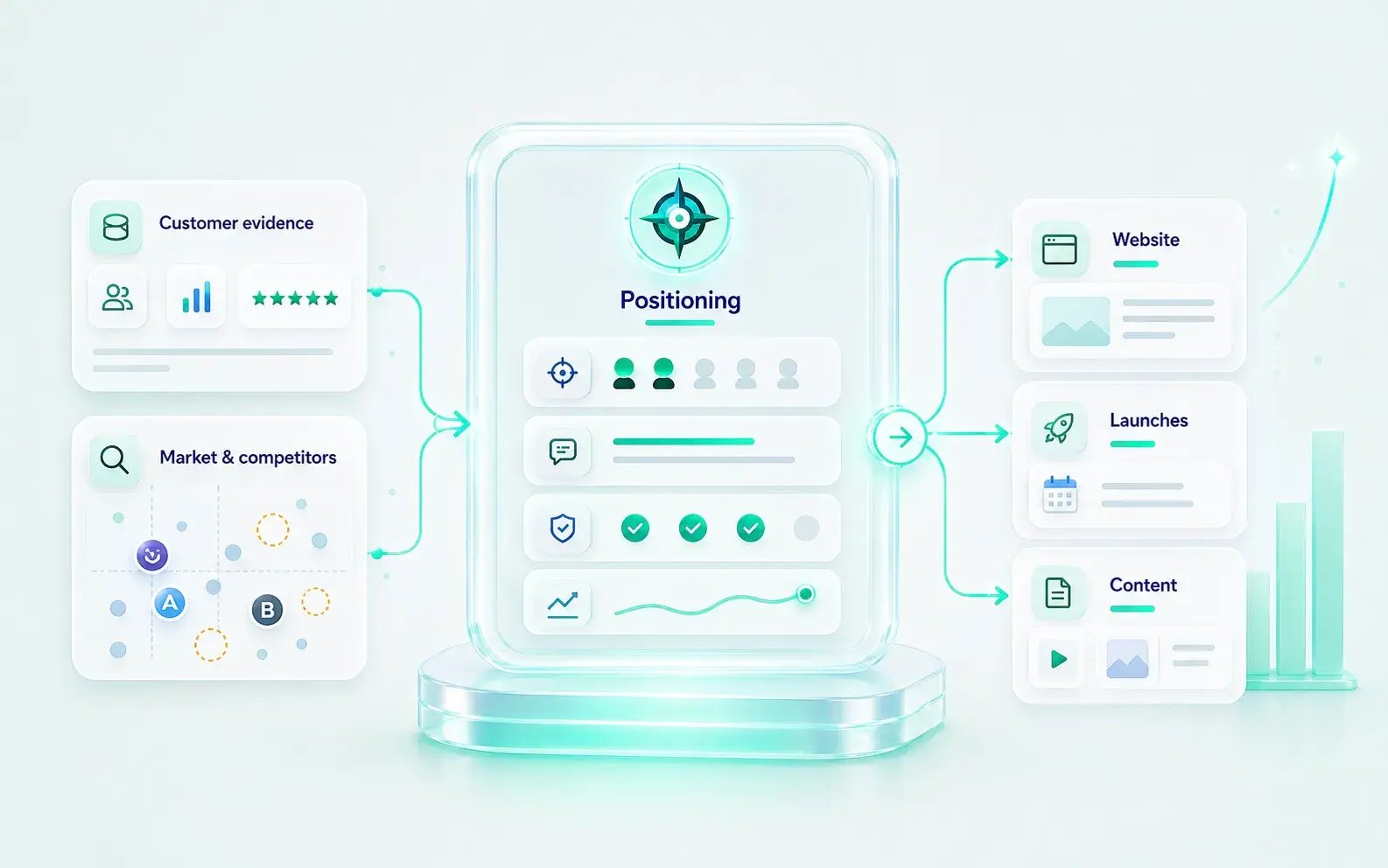
The model · before any channel work

Positioning decided — before a euro hits a channel.

ICP, narrative and go-to-market settled first, so execution has something to compound on. The unglamorous work that makes every later campaign cheaper.

The buying question

Why does positioning come before channels?

Because channels amplify whatever you put in — including confusion. Clear positioning decides who you serve, what you claim and why you win; every ad, page and email then compounds the same story instead of fragmenting it. Skipping it means paying to broadcast inconsistency.

What changes

Every later decision gets easier.

With ICP and narrative settled, content topics, channel picks and sales messaging stop being debates — they become derivations.

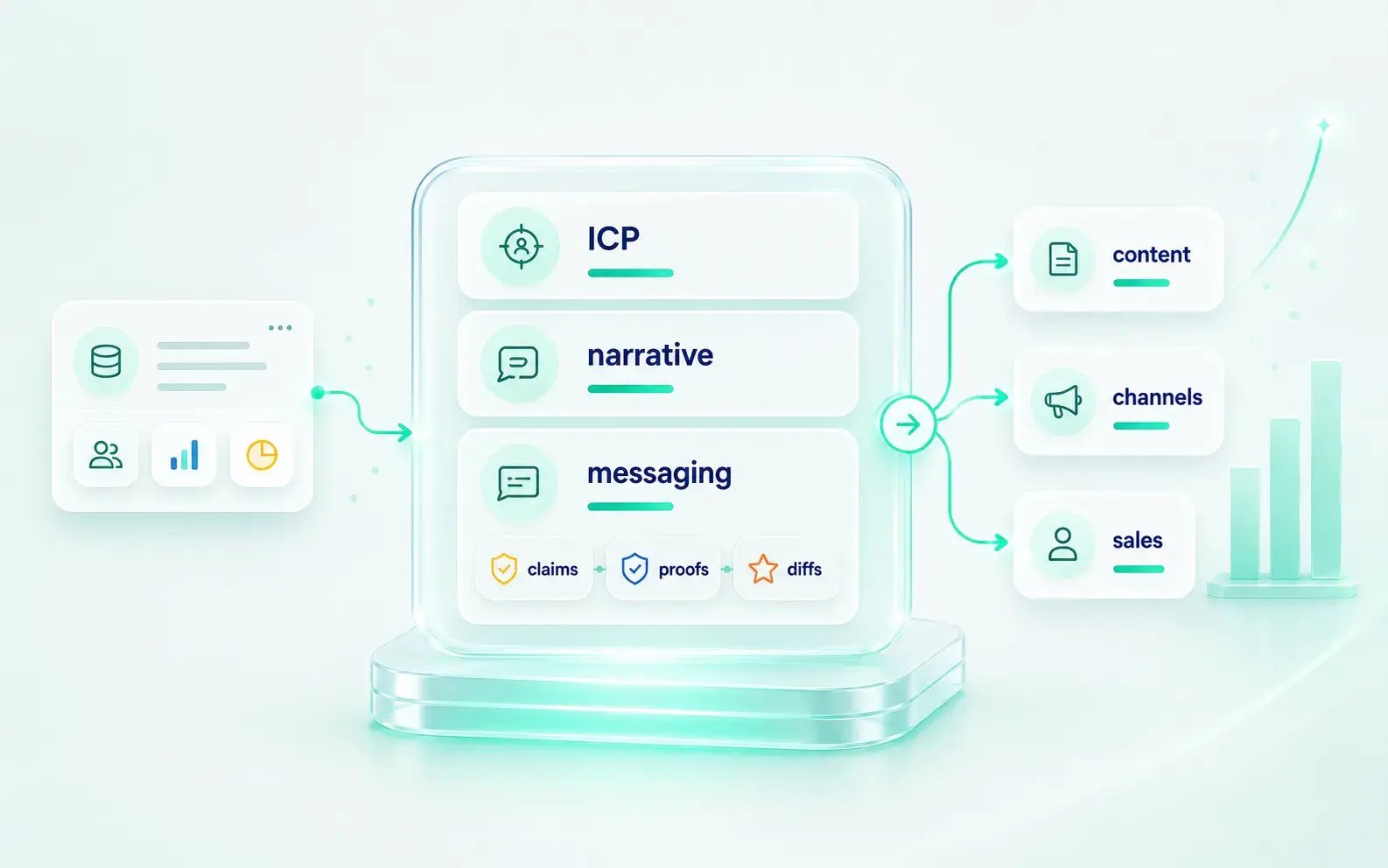
  • ICP defined by evidence, not opinion
  • A narrative sales actually uses
  • Messaging hierarchy: claims, proofs, differentiators
How we work

Evidence in, decisions out.

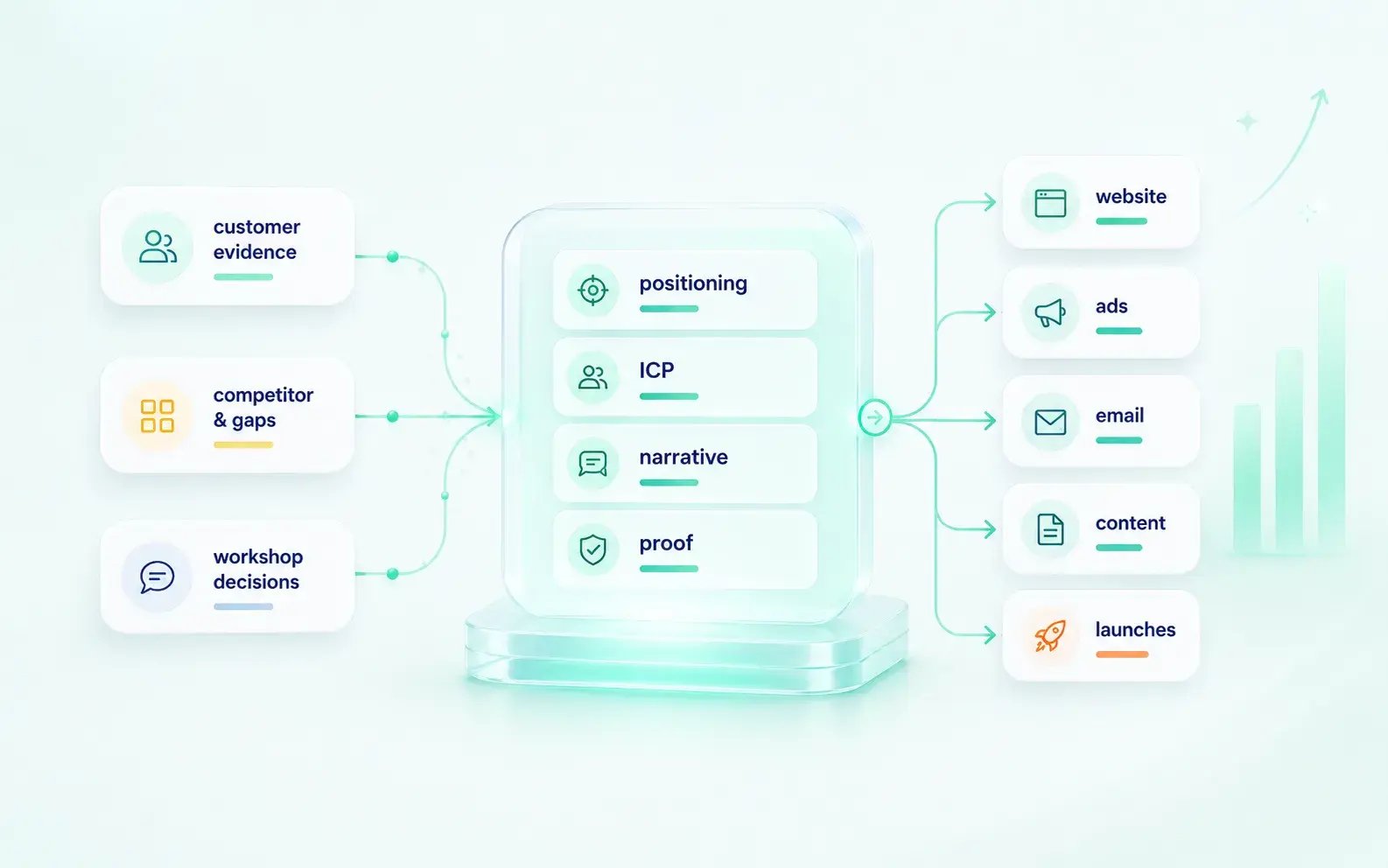
We combine your customer data with our competitive-intelligence tooling, so positioning is chosen against the real market map — including the gaps rivals left open.

  • Competitor positioning decoded as input
  • Workshops that end in decisions, not decks
  • Output wired straight into site, launches and content

Questions teams ask about this

We already have a value proposition — is this redundant?

If sales uses it verbatim and your site converts, maybe. The audit usually shows drift between what you claim, what buyers hear and what competitors own — that gap is the work.

How long does it take?

Weeks, not months: typically three to five working sessions plus research in between, ending in a positioning decision and a messaging hierarchy ready for execution.

What do we get at the end?

A decided ICP, narrative and messaging hierarchy — documented, argued and ready to deploy across site, sales and content. Plus the competitive map it was chosen against.